

[2026 Latest] ROI of AI Yield Prediction for Agricultural Corporations: Profit Maximization Models Derived from Biomass Estimation
The greatest management challenge facing Japanese agricultural corporations is "yield uncertainty," which is dictated by weather fluctuations and environmental factors. Traditionally, agricultural management relied on yield predictions based on the experience and intuition (tacit knowledge) of experts. However, as of 2026, with the progression of labor shortages and the expansion of management scale (agribusiness transformation), the limitations of this approach have become apparent. This article explains how the introduction of high-precision biomass estimation using computer vision and AI yield prediction can dramatically improve the ROI (Return on Investment) of agricultural corporations and build a sustainable profit maximization model.
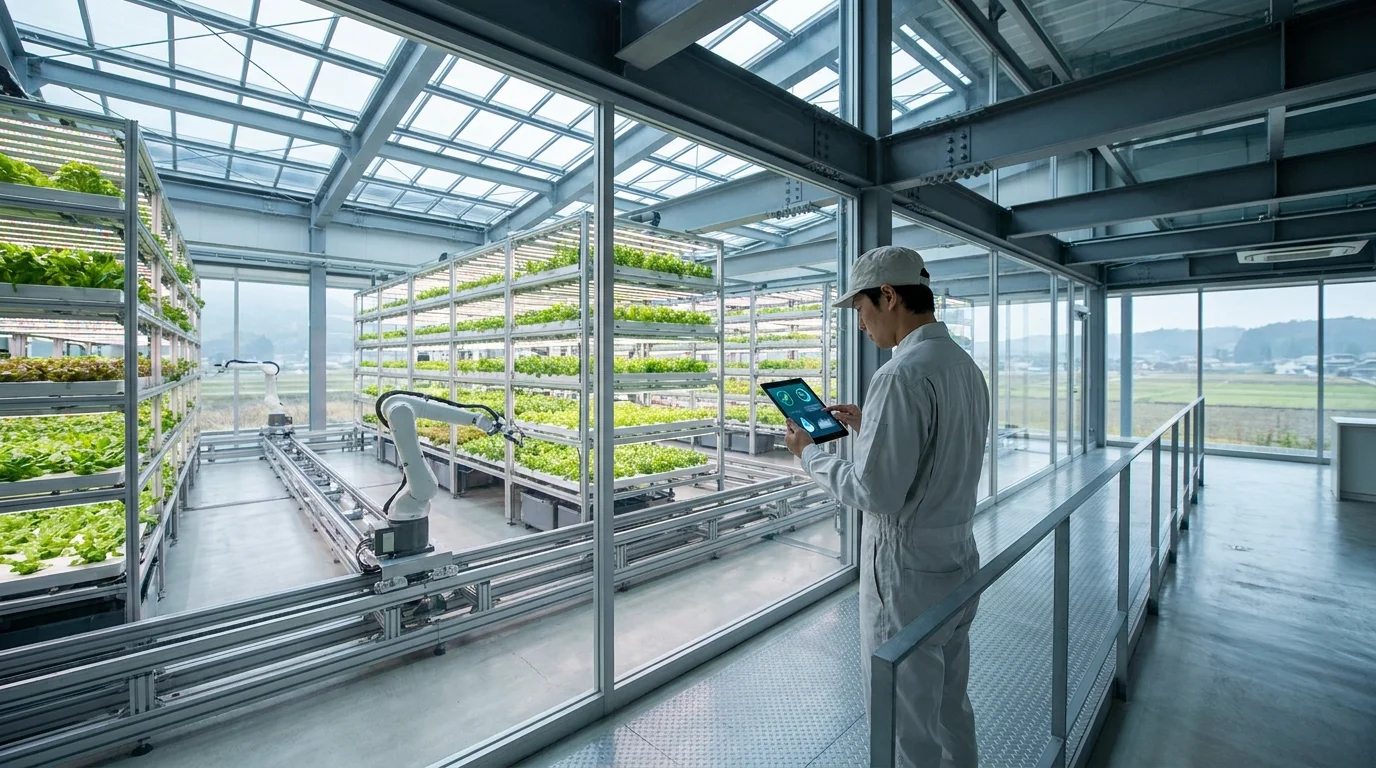
Table of Contents (Click to expand/collapse)
- 1. Technical Breakthroughs in Yield Prediction via Biomass Estimation
- 2. ROI Structure in Agricultural Management: Cost Reduction and Revenue Stabilization
- 3. Loss Avoidance Strategies through Integration with Pest and Disease Detection AI
- 4. Management Indicators for Smart Agricultural Corporations Post-2026
1. Technical Breakthroughs in Yield Prediction via Biomass Estimation
The foundation of AI yield prediction lies in "remote sensing" and "biomass estimation" technologies that analyze image data obtained from drones and fixed-point cameras. By using 3D modeling and deep learning (CNN/Transformer) to analyze stem thickness, leaf overlap, and fruit enlargement—factors that were difficult to assess with traditional NDVI (Normalized Difference Vegetation Index) alone—it is now possible to achieve extremely high prediction accuracy with an error margin of less than 5%.
Particularly in greenhouse horticulture, integrating time-series data from environmental control systems (CO2 concentration, irrigation, temperature) with image analysis allows for the real-time capture of phenological changes, enabling the identification of harvest timing on a daily basis. This strengthens supply commitments to wholesale markets and end-users, realizing "data-driven agriculture" that minimizes stockout risks and waste losses due to excess inventory.
2. ROI Structure in Agricultural Management: Cost Reduction and Revenue Stabilization
When agricultural corporations introduce AI, the primary focus should not be mere labor-saving but rather the "contribution to cash flow." Improved yield prediction accuracy enables the optimal allocation of short-term labor (workforce optimization) aligned with harvest periods. In agricultural management, where labor costs account for a significant portion of operating expenses, this resource optimization directly boosts the bottom line.
Proposing Profit Simulations for Agricultural AI Implementation
Our experts will assist you in calculating specific ROI based on your field data and selecting the optimal AgTech solutions.
Talk to us for a free strategy consultationSummary
The implementation of AI yield prediction in agricultural corporations is more than just an improvement in production technology; it is a "strategic investment" that brings financial health and business sustainability. High-precision data from biomass estimation enables optimal labor allocation and supply-demand adjustment, while integration with pest and disease detection minimizes the risk of catastrophic losses. In 2026, transitioning to a data-driven "profit maximization model" will be the key to leading next-generation agricultural management.
Published: June 5, 2026 / By: Osamu Yasuda

Related Articles


References
- [1] Ministry of Agriculture, Forestry and Fisheries, "Roadmap for the Realization of Smart Agriculture 2026"
- [2] International Journal of Agricultural AI, "Deep Learning in Biomass Estimation and Yield Prediction"
- [3] Agricultural Economics Society of Japan, "ROI Analysis and Implementation Models for Data-Driven Agriculture"